May 20, 2026.
Published in 2026 by the Institute for Philosophy and Social Theory, the University of Belgrade, the Regional Center for Advanced Studies in the Humanities and the Regional Network of Centers for Advanced Studies in Southeast Europe, the report Youth Perceptions of Europe in the Western Balkans: Key Regional Patterns and Implications analyzes how young people in the Western Balkans perceive Europe and the European Union through a series of deliberative workshops organized across six Western Balkan capitals.
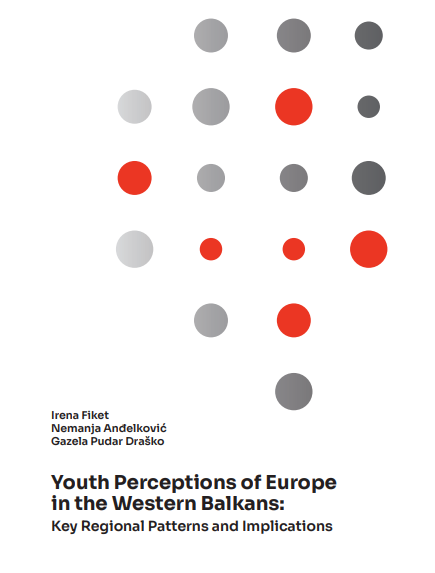
The study is based on contributions by 92 participants from Albania, Bosnia and Herzegovina, Kosovo, Montenegro, North Macedonia and Serbia, with the aim of identifying common trends and national differences in their attitudes toward the European project.
The outcomes highlight a significant paradox: young people demonstrate strong support for European values about democracy, the rule of law, human rights and institutional stability, while expressing growing frustration with the slow pace of the enlargement process, the EU’s perceived double standards and persistent weaknesses in national governance. Europe remains a source of opportunities in terms of education, mobility and employment, but its attractiveness is countered by a feeling of political exclusion, mistrust of institutions and a perception of “belonging without membership” that characterizes the Western Balkans’ place in the European project.
The report emphasizes that the European Union’s future legitimacy in the region will depend on its ability to transform its normative commitments into concrete results. The authors call for more active youth participation in decision-making processes, more direct communication with local communities and increased support for reforms related to transparency, education and employment. By strengthening the inclusion of younger generations and bridging the gap between rhetoric and action, the EU could consolidate its legitimacy and maintain its influence among a population that remains largely supportive of European integration despite growing disillusionment.
You can find the report Youth Perceptions of Europe in the Western Balkans: Key Regional Patterns and Implications by Irena Fiket, Nemanja Anđelković, and Gazela Pudar Draško here.