30 September 2026
Amid escalating trade pressures and aggressive diplomatic realignments from Washington, Ottawa is looking across the Atlantic for novel ways to secure its economic and strategic future. The recent proposal by European Commission President Ursula von der Leyen to establish a brand-new “associate member” status for Canada marks a fascinating turning point in transatlantic relations.
A new article by Dimitar Bechev examines the state of play and the options for such a development. While Prime Minister Mark Carney and Canadian leaders have drawn clear boundaries stopping well short of full EU membership, the initiative signals a deep institutional and economic pivot. Driven by shared vulnerabilities and the unpredictable shocks of a Trump-led U.S. trade policy, both Ottawa and Brussels recognize the mutual urgency of buffering their democracies against external economic coercion.
The proposed framework aims to build closely upon existing agreements—such as CETA and recent cooperation in defense procurement, critical minerals, technology, and the Arctic—to construct a flexible, non-traditional alliance. However, defining the technical, legislative, and sovereignty limits of this unprecedented partnership will require delicate and extensive negotiations.
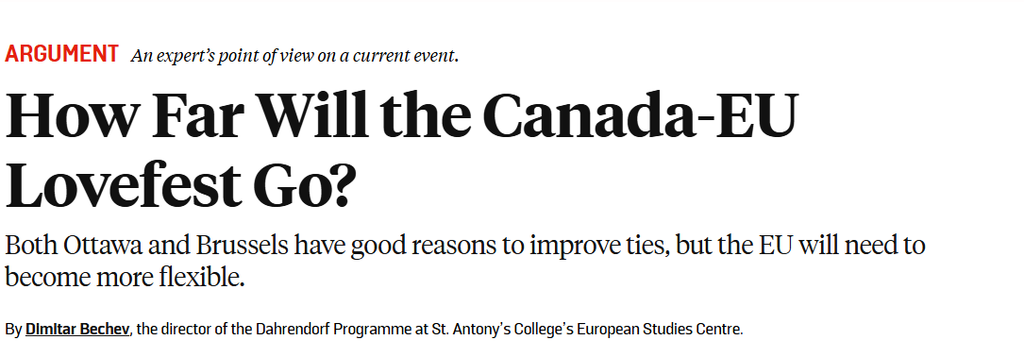
To dive deeper into how Canada is navigating these turbulent geopolitical waters and what an EU-Canada associate status could mean for global trade and security, read the full piece How Far Will the Canada-EU Lovefest Go? by Dimitar Bechev in Foreign Policy here